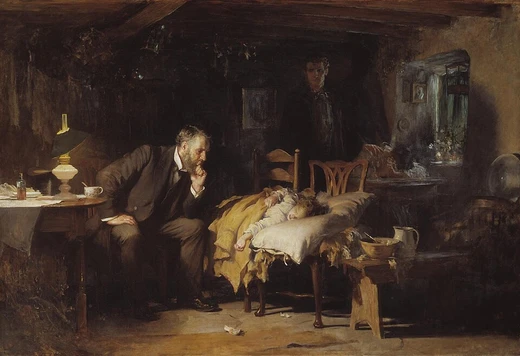
Jonas Salk
American virologist who developed one of the first successful polio vaccines.

Jonas Edward Salk was an American virologist and medical researcher who developed one of the first successful polio vaccines. Born in New York City on October 28, 1914, he attended the City College of New York and New York University School of Medicine. In 1947, Salk accepted a professorship at the University of Pittsburgh School of Medicine, where he undertook a project beginning in 1948 to determine the number of different types of poliovirus. For the next seven years, he devoted himself to developing a vaccine against polio. When the vaccine's success was made public in April 1955, Salk was hailed as a "miracle worker" and chose not to patent the vaccine or seek any profit from it in order to maximize its global distribution.
- born
- October 28, 1914
- died
- June 23, 1995
- field
- Virology, medical research
- nationality
- American
- known_for
- Developing one of the first successful polio vaccines
Verified Timeline
Lore & Background
Jonas Salk was born on October 28, 1914, in New York City to Daniel and Dora Salk. He was Jewish-American. At age 13, Salk entered Townsend Harris Hall Prep School, a public school for intellectually gifted students. He enrolled in City College of New York, earning a Bachelor of Science degree in chemistry in 1934. According to biographer David Oshinsky, for working-class immigrant families, City College represented the apex of public higher education—tuition was free, and competition was intense. Salk then enrolled in New York University School of Medicine, which did not discriminate against Jews, unlike many surrounding medical schools. During his studies, he became absorbed in research rather than practicing medicine, focusing on bacteriology and virology. He said his desire was to help humankind in general rather than single patients. After medical school, he worked in Thomas Francis's laboratory at the University of Michigan, contributing to the development of an influenza vaccine. In 1947, Salk accepted a professorship at the University of Pittsburgh School of Medicine. Beginning in 1948, he undertook a project to determine the number of different types of poliovirus, gathering supplies and researchers including Julius Youngner, Byron Bennett, L. James Lewis, Elsie N. Ward, and secretary Lorraine Friedman. For the next seven years, he devoted himself to developing a vaccine against polio. When the vaccine's success was made public in April 1955, Salk was hailed as a "miracle worker" and chose not to patent the vaccine or seek any profit from it. The National Foundation for Infantile Paralysis and the University of Pittsburgh looked into patenting but determined the techniques were likely not novel enough to patent. An immediate rush to vaccinate began in the United States and around the world. Many countries began polio immunization campaigns using Salk's vaccine, including Canada, Sweden, Denmark, Norway, West Germany, the Netherlands, Switzerland, and Belgium. By 1959, the Salk vaccine had reached about 90 countries. Less than 25 years after the release of Salk's vaccine, domestic transmission of polio had been eliminated in the United States. In 1963, Salk founded the Salk Institute for Biological Studies in La Jolla, California, which is today a center for medical and scientific research. He continued to conduct research and publish books, focusing in his last years on the search for a vaccine against HIV. Salk campaigned vigorously for mandatory vaccination, calling the universal vaccination of children against disease a "moral commitment." His personal papers are today stored in the Geisel Library at the University of California, San Diego.
Reader's Guide
Jonas Salk's development of one of the first successful polio vaccines marked a turning point in public health. The vaccine's success was first made public in April 1955, leading to an immediate rush to vaccinate in the United States and around the world. Many countries began polio immunization campaigns using Salk's vaccine, including Canada, Sweden, Denmark, Norway, West Germany, the Netherlands, Switzerland, and Belgium. By 1959, the Salk vaccine had reached about 90 countries. Less than 25 years after the release of Salk's vaccine, domestic transmission of polio had been eliminated in the United States. Salk chose not to patent the vaccine or seek any profit from it in order to maximize its global distribution. The National Foundation for Infantile Paralysis and the University of Pittsburgh looked into patenting but determined the techniques were likely not novel enough to patent. An attenuated live oral polio vaccine was developed by Albert Sabin, coming into commercial use in 1961. Salk's later work included founding the Salk Institute for Biological Studies in 1963 and researching a vaccine against HIV. He campaigned vigorously for mandatory vaccination, calling universal vaccination of children a "moral commitment."
Did You Know?
- Salk chose not to patent the polio vaccine or seek any profit from it in order to maximize its global distribution.
- By 1959, the Salk vaccine had reached about 90 countries.
- Less than 25 years after the release of Salk's vaccine, domestic transmission of polio had been eliminated in the United States.
- Salk founded the Salk Institute for Biological Studies in La Jolla, California, in 1963.
- In his last years, Salk focused on the search for a vaccine against HIV.
Frequently Asked Questions
Who is Jonas Salk?
Jonas Salk was an American virologist and medical researcher born in New York City in 1914. He is best remembered for creating one of the first effective vaccines against polio. He passed away in June 1995.
What is Jonas Salk's main achievement?
Salk developed a successful polio vaccine, one of the first to effectively protect against the disease. His work involved identifying the distinct strains of poliovirus and then engineering a vaccine that could trigger immunity against them.
Where did Jonas Salk conduct his polio research?
He held a professorship at the University of Pittsburgh School of Medicine, where he led a project to classify the different types of poliovirus. It was at Pittsburgh that he devoted himself to building and testing a polio vaccine.
Why is Jonas Salk considered a pioneer in medicine?
His vaccine dramatically curtailed paralytic polio worldwide and proved that a viral infection could be defeated through vaccination. This made him one of the most celebrated figures in twentieth-century medical research.
What education did Jonas Salk receive before his research career?
Salk attended the City College of New York for his undergraduate studies and then completed his medical training at New York University School of Medicine. After that, he moved into academic research and virology.
More in Pioneers Of Medicine 1-24
Elsewhere in the Pioneers Of Medicine universe
Spotted an error? Know more?
This is a living reference — every entry is fact-audited, and reader corrections feed straight into our audit queue. Suggest an edit · See this site's audit record