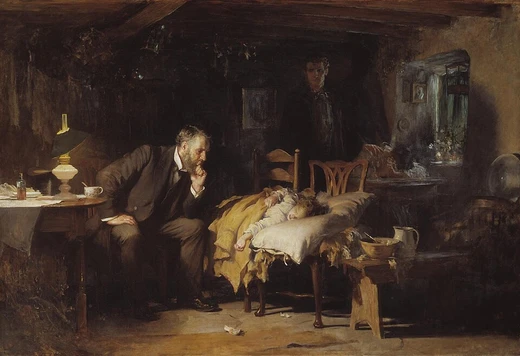
Li Wenliang
Ophthalmologist who warned colleagues about early COVID-19 cases.

His subsequent admonishment by police and death from COVID-19 drew widespread attention.
Verified Timeline
Lore & Background
His parents were former state enterprise workers who lost their jobs in the 1990s. The outbreak was later confirmed to be a new coronavirus, SARS-CoV-2.
Reader's Guide
Li Wenliang's case became a symbol of the challenges faced by medical professionals in reporting early signs of the COVID-19 pandemic. His initial warning, shared privately among classmates, was met with official admonishment, but subsequent inquiries exonerated him. Li's story underscores tensions between public health communication and official responses during a crisis.
Did You Know?
- Li Wenliang was born into a Manchu family in Beizhen, Liaoning.
- He joined the Chinese Communist Party in his second year of medical school.
A Life Devoted to the Forgotten
Carlo Urbani's medical path was shaped by a deep commitment to those most vulnerable to infectious disease. After earning his medical degree from the University of Ancona in 1981, he pursued specialization in infectious and tropical diseases at the University of Messina, followed by postgraduate study in tropical parasitology. His humanitarian instincts surfaced early: as a young physician he joined the Italian Catholic NGO Mani Tese, and in 1987 he spent a month in Ethiopia working on endemic diseases. Back in Italy, he served as a primary aide in the infectious diseases department in Macerata before becoming an external consultant to the World Health Organization in 1993. In 1996 he joined Médecins Sans Frontières, relocating with his family to Phnom Penh, Cambodia, for a year. Upon returning to Macerata he became president of the Italian MSF chapter and mounted a campaign against multinational pharmaceutical firms that kept prices on essential medicines for AIDS, malaria, and tuberculosis unaffordable. In 1999 he traveled as part of the MSF delegation that accepted the Nobel Peace Prize, and he used a share of the prize money to establish a fund promoting global access to essential medicines for the world's poorest communities.
The Hanoi Recognition
In late February 2003, Urbani was summoned to the French Hospital in Hanoi, Vietnam, to examine an American businessman named Johnny Chen who had fallen gravely ill. The attending physicians had initially attributed Chen's symptoms to a severe bout of influenza, but Urbani's clinical eye recognized something far more alarming: a novel, highly contagious viral disease. Without hesitation, he contacted the World Health Organization, and that single alert set in motion a global response—centered on isolation and quarantine protocols—that contained the epidemic within roughly five months. He also lobbied the Vietnamese Health Ministry to begin isolating infected patients and screening travelers, a move that slowed the early spread of the virus. The speed and decisiveness of his identification proved critical; had the disease been misdiagnosed or the warning delayed, the outbreak could have escalated far beyond what ultimately transpired. Urbani's intervention in Hanoi stands as one of the most consequential acts of clinical vigilance in modern public health history.
Eighteen Days in Isolation
On 11 March 2003, Urbani boarded a flight from Hanoi to Bangkok, where he was scheduled to present on childhood parasites at a medical conference. En route he began to feel feverish, and a colleague who met him at the Bangkok airport immediately called an ambulance. It was too late to prevent the worst: Urbani had contracted SARS while treating infected patients in Hanoi. His hospital room was converted into an improvised isolation ward, and all communication with staff and visitors took place through an intercom system. As his respiratory function deteriorated, he was placed on a mechanical ventilator. During a brief window of lucidity, he requested that a priest be brought to administer last rites, and he also asked that his lung tissue be donated for scientific research—a final act of service consistent with his entire career. He died on 29 March 2003, after eighteen days in intensive care. The specific viral strain isolated from his case, designated the SARS-CoV Urbani strain, subsequently became the reference variant for the entire outbreak.
Posthumous Recognition and Enduring Legacy
Urbani's contributions were honored by multiple nations in the months following his death. Foreign governments also recognized his service: the Friendship Order was conferred on 7 April 2003, and the Labor Order followed on 12 May 2003. Beyond state honours, his legacy persists in institutional form. The SARS-CoV Urbani strain remains the reference variant for the 2003 outbreak, ensuring his name is embedded in the scientific literature of the disease. Organizations such as the Carlo Urbani International association, the Associazione Italiana Carlo Urbani, and the Carlo Urbani Center carry forward his mission. The fund he established from his share of the 1999 Nobel Peace Prize money continues to champion access to essential medicines for the world's poorest populations. Books and biographies, including Pierluigi Fiorini's 2004 Italian-language work, have preserved his story for new generations of physicians and public-health workers.
Frequently Asked Questions
Who is Li Wenliang?
Li Wenliang was a Chinese eye specialist who worked at the Central Hospital of Wuhan. He is best remembered for sounding an early alarm about what would become the COVID-19 pandemic.
What was Li Wenliang's profession?
He was an ophthalmologist, meaning he specialized in the diagnosis and treatment of eye conditions, at the Central Hospital of Wuhan in China.
Why is Li Wenliang considered important in medical history?
His story became a global symbol of the personal risks faced by frontline clinicians who raise early safety concerns. His death and the public outcry that followed sparked worldwide conversations about protecting medical whistleblowers.
More in Pioneers Of Medicine 25-29
Elsewhere in the Pioneers Of Medicine universe
Spotted an error? Know more?
This is a living reference — every entry is fact-audited, and reader corrections feed straight into our audit queue. Suggest an edit · See this site's audit record