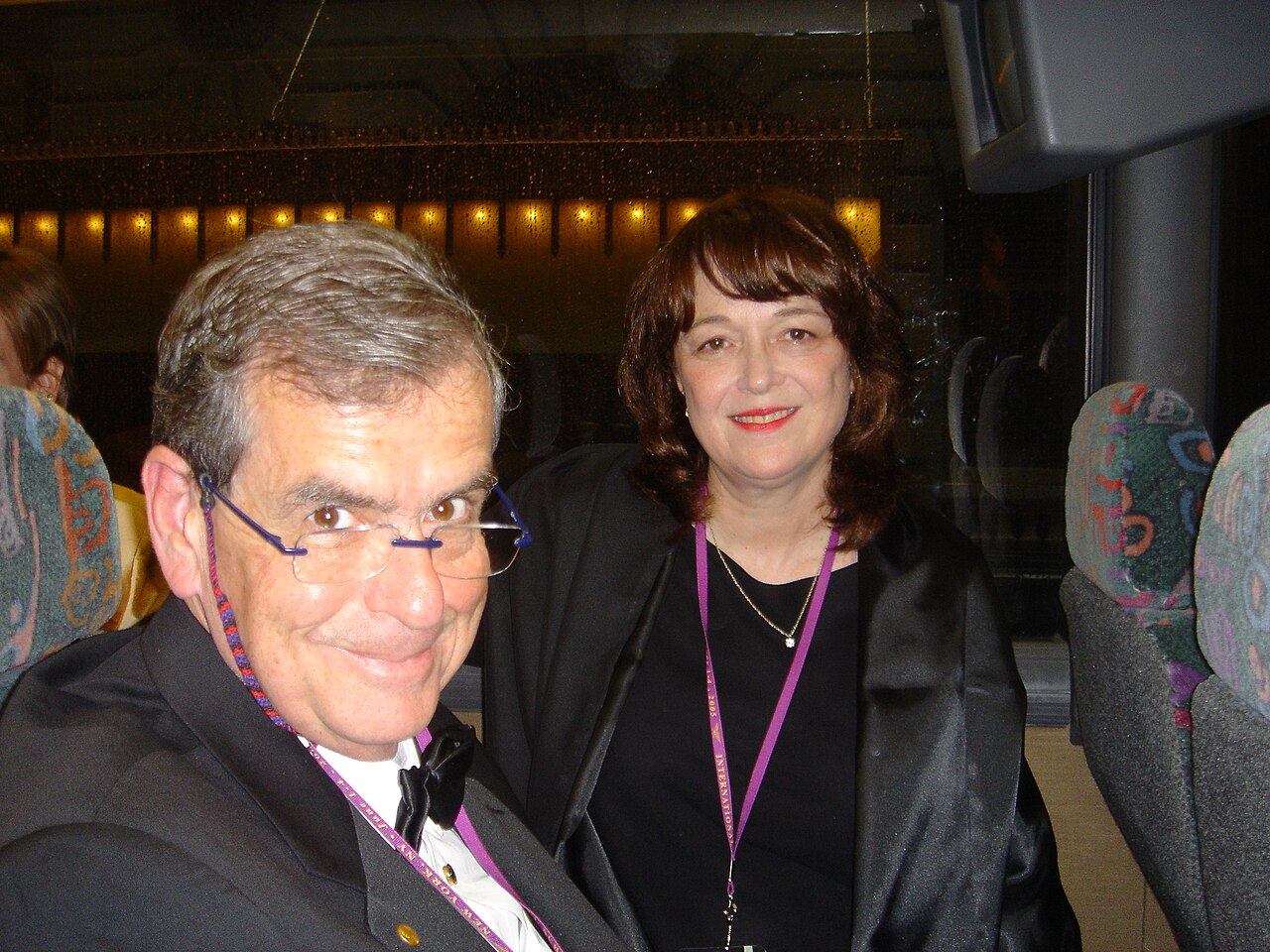
Linda B. Buck
American biologist who discovered olfactory receptors.

Royal Society uploader · CC BY-SA 4.0
Linda Brown Buck (born January 29, 1947) is an American biologist best known for her work on the olfactory system. She was awarded the 2004 Nobel Prize in Physiology or Medicine, along with Richard Axel, for their work on olfactory receptors. She is currently on the faculty of the Fred Hutchinson Cancer Research Center in Seattle.
- born
- January 29, 1947
- field
- Biology, Olfaction
- nationality
- American
- known_for
- Discovery of olfactory receptors, Nobel Prize in Physiology or Medicine (2004)
Verified Timeline
Lore & Background
Linda B. Buck was born in Seattle, Washington on January 29, 1947. Her father was an electrical engineer who spent his time inventing and building different items in his spare time, while her mother was a homemaker who spent a majority of her free time solving word puzzles. Buck was the second of three children, all of whom are girls. Her father has Irish ancestry as well as ancestors dating back to the American revolution. Her mother is of Swedish ancestry. In 1994 Buck met Roger Brent, also a biologist. The two married in 2006. Buck received her B.S. in psychology and microbiology in 1975 from the University of Washington, Seattle. She is the first female University of Washington alumnus to win the Nobel Prize. She was awarded her Ph.D. in immunology in 1980 under the direction of Professor Ellen Vitetta at the University of Texas Southwestern Medical Center at Dallas. In 1980, Buck began postdoctoral research at Columbia University under Benvenuto Pernis (1980–1982). In 1982, she joined the laboratory of Richard Axel, also at Columbia in the Institute of Cancer Research. After reading Sol Snyder's group research paper at Johns Hopkins University, Buck set out to map the olfactory process at the molecular level, tracing the travel of odors through the cells of the nose to the brain. Buck and Axel worked with rat genes in their research and identified a family of genes that code for more than 1000 odor receptors and published these findings in 1991. Later that year, Buck became an assistant professor in the Neurobiology Department at Harvard Medical School where she established her own lab. After finding how odors are detected by the nose, Buck published her findings in 1993 on how the inputs from different odor receptors are organized in the nose. She is a Full Member of the Basic Sciences Division at Fred Hutchinson Cancer Research Center, and an Affiliate Professor of Physiology and Biophysics at the University of Washington, Seattle. Buck retracted 3 papers, published in Nature (pub. 2001, retracted 2008), Science (pub 2006, retracted 2010) and Proceedings of the National Academy of Sciences (pub 2005, retracted 2010) due to falsification/fabrication of results by lead author and collaborator Zhihua Zou.
Reader's Guide
Linda B. Buck's landmark paper published in 1991 with Richard Axel discovered that hundreds of genes code for the odorant sensors located in the olfactory neurons of our noses. Each receptor is a protein that changes when an odor attaches to the receptor, causing an electrical signal to be sent to the brain. Differences between odorant sensors mean that certain odors cause a signal to be released from a certain receptor. We are then able to interpret varying signals from our receptors as specific scents. To do this, Buck and Axel cloned olfactory receptors, showing that they belong to the family of G protein-coupled receptors. By analyzing rat DNA, they estimated that there were approximately 1,000 different genes for olfactory receptors in the mammalian genome. This research opened the door to the genetic and molecular analysis of the mechanisms of olfaction. In their later work, Buck and Axel have shown that each olfactory receptor neuron remarkably only expresses one kind of olfactory receptor protein and that the input from all neurons expressing the same receptor is collected by a single dedicated glomerulus of the olfactory bulb. Buck's primary research interest is on how pheromones and odors are detected in the nose and interpreted in the brain.
Did You Know?
- Linda B. Buck is the first female University of Washington alumnus to win the Nobel Prize.
- She met biologist Roger Brent in 1994 and married him in 2006.
- Buck and Axel estimated approximately 1,000 different genes for olfactory receptors in the mammalian genome.
- She retracted 3 papers due to falsification/fabrication of results by lead author and collaborator Zhihua Zou.
- Buck was awarded an honorary doctorate by Harvard University in 2015.
From Immunology to Olfaction: A Nonlinear Career Path
Linda Buck's trajectory into olfactory science was far from straightforward. After completing a B.S. in psychology and microbiology at the University of Washington in 1975, she turned to immunology, earning her Ph.D. in 1980 under Professor Ellen Vitetta at the University of Texas Southwestern Medical Center in Dallas. That immunology training would prove serendipitously useful years down the road. In 1980 she began postdoctoral work at Columbia University with Benvenuto Pernis, and by 1982 she had moved into Richard Axel's laboratory within the Institute of Cancer Research. It was there, after encountering a research paper from Sol Snyder's group at Johns Hopkins, that Buck committed herself to mapping the olfactory process at the molecular level—following the journey of odor molecules from nasal cells to the brain. Using rat genes, she and Axel identified a gene family responsible for more than 1,000 odor receptors, publishing their results in 1991. That same year she took a position as assistant professor in the Neurobiology Department at Harvard Medical School and built her own independent laboratory.
The 1991 Breakthrough and the 2004 Nobel Prize
The 2004 Nobel Prize in Physiology or Medicine, shared with Richard Axel, honored a discovery first detailed in their 1991 paper: that hundreds of separate genes encode the odorant sensors housed in olfactory neurons. Each sensor is a protein that shifts conformation when an odor molecule latches onto it, generating an electrical signal that races to the brain. Because each sensor differs slightly from its neighbors, specific odors trigger specific receptors, and the brain reads the resulting signal pattern as a distinct scent. To demonstrate this, Buck and Axel cloned olfactory receptors and established that they belong to the G protein-coupled receptor family. Analyzing rat DNA, they estimated roughly 1,000 distinct olfactory receptor genes in the mammalian genome. Subsequent work showed that each olfactory receptor neuron expresses only a single type of receptor protein, and that signals from all neurons sharing the same receptor funnel into one dedicated glomerulus in the olfactory bulb. Their findings opened the field to genetic and molecular investigation of olfaction.
A Career Recognized by the Scientific Community
Buck's contributions have drawn an extraordinary array of honors spanning more than two decades. She received the Takasago Award for Research in Olfaction in 1992, and in 1996 alone she was named recipient of the Unilever Science Award, the R.H. Wright Award in Olfactory Research, and the Lewis S. Rosenstiel Award for Distinguished Work in Basic Medical Research. The Perl/UNC Neuroscience Prize followed in 2002, and the Gairdner Foundation International Award arrived in 2003. That same year she was elected to the National Academy of Sciences, and in 2006 she joined the Institutes of Medicine. In 2005 the American Academy of Achievement presented her with its Golden Plate Award. Since 2008 she has held fellowships in both the American Association for the Advancement of Science and the American Academy of Arts and Sciences. In 2015 Harvard University granted her an honorary doctorate, and she was elected a Foreign Member of the Royal Society. She also sits on the Selection Committee for Life Science and Medicine that selects Shaw Prize laureates. Notably, she remains the first female alumnus of the University of Washington to receive a Nobel Prize.
Roots in Seattle and Life Beyond the Laboratory
Linda Buck was born in Seattle, Washington, on January 29, 1947, into a home where making things and solving puzzles were everyday pastimes. Her father, an electrical engineer with Irish and American Revolutionary roots, filled his evenings inventing and constructing all manner of items. Her mother, of Swedish heritage, was a homemaker who devoted much of her leisure to word puzzles. Buck was the second of three daughters. That inquisitive, hands-on upbringing likely nurtured the curiosity that would later drive her research. In 1994 she met fellow biologist Roger Brent, and the couple married in 2006. Even after her Nobel recognition, Buck has remained deeply embedded in Seattle's academic community, serving as a Full Member of the Basic Sciences Division at the Fred Hutchinson Cancer Research Center and as an Affiliate Professor of Physiology and Biophysics at the University of Washington. Her ongoing work continues to explore how pheromones and odors are detected in the nose and decoded by the brain—the very question that drew her into the field in the early 1980s.
Gallery





Frequently Asked Questions
Who is Linda B. Buck?
Linda B. Buck is an American biologist born on January 29, 1947, who made groundbreaking contributions to understanding how the nose detects smells. She is celebrated in the medical community for her foundational research on the olfactory system.
What did Linda B. Buck discover?
Buck identified and characterized the family of olfactory receptor proteins that allow humans and other animals to perceive different odors. Her work revealed the genetic basis behind how we distinguish millions of distinct scents.
When and why did Linda B. Buck receive the Nobel Prize?
In 2004, she was awarded the Nobel Prize in Physiology or Medicine for uncovering the molecular mechanism of smell detection. The prize recognized her discovery of the receptor genes that form the basis of the olfactory system.
Who shared the 2004 Nobel Prize with Linda B. Buck?
She shared the honor with fellow American scientist Richard Axel, who worked on the same line of olfactory research. Their joint effort mapped the receptor gene family responsible for smell perception.
Why is Linda B. Buck considered a pioneer of medicine?
Her identification of olfactory receptors opened new pathways for understanding sensory biology and neurological conditions linked to smell. This foundational discovery has influenced research across neuroscience, genetics, and pharmacology.
More in Pioneers Of Medicine 25-29
Elsewhere in the Pioneers Of Medicine universe
Spotted an error? Know more?
This is a living reference — every entry is fact-audited, and reader corrections feed straight into our audit queue. Suggest an edit · See this site's audit record